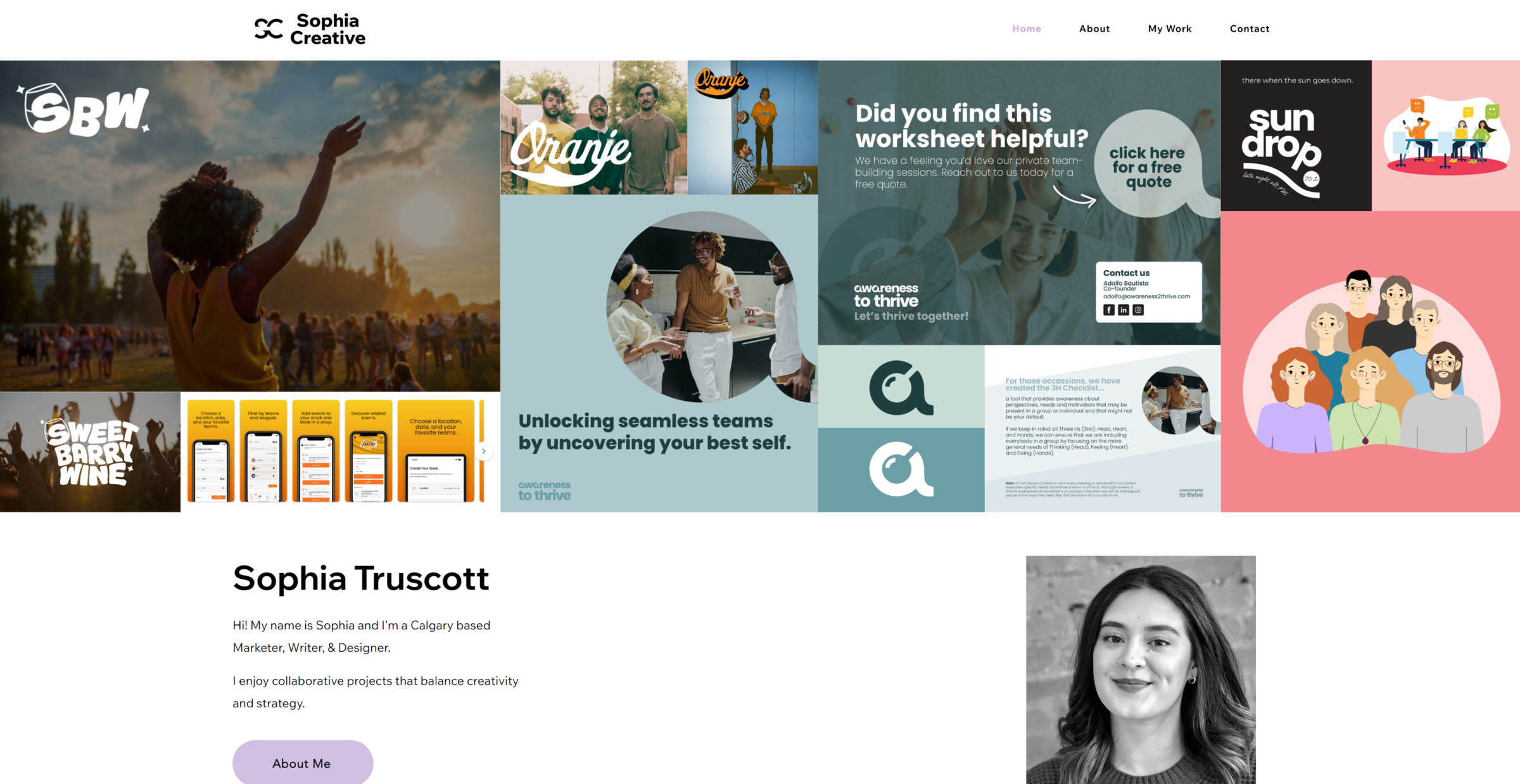


A brand is a living, evolving entity. It’s never a set-it-and-forget-it deal. It should be flexible enough to grow with your business and respond to its environment. Like a small animal in a big ecosystem, it has to get clever if it wants to survive. When you are your business, it’s even more important.
I sort of got lost in the weeds with Sophia Creative’s brand over the last few years. I had spent so much time crafting identities for other people and their projects that I forgot who I was in the process. It’s sort of like when you spend all day baking cookies… they’re still good (all the right ingredients) but they aren’t surprising or imaginative or unique. Sometimes things just taste better when someone makes them for you.
Long story short, I felt uninspired about my own brand. Not only that, but I was having a hard time figuring out how to display my visual work in a way that highlighted its breadth without blurring the identity of the brand that contained it.
I gaurantee I’m not the only freelance creative who has wrestled with these challenges, so I’ve put together some helpful reminders for others on the same portfolio journey. My top 3 learned lessons in personal branding and portfolios, below.
My Top 3 Lessons In Personal Branding
- Perfection is a waste of time
- This one is easy to agree with in theory, but much harder to implement in practice. I’ve always been a bit of a perfectionist, so naturally I wanted everything on my portfolio to be exactly the way I envisioned it before I dared let anyone see it. This is, in hindsight, obviously impractical for several reasons.
- First, no one cares about your image or mistakes as much as you do. They’re busy worrying about themselves, I promise!
- Now let’s move on to the real reason perfecting things will waste your time: you’ll be updating your portfolio so frequently with new work that things are bound to change, especially in the beginning. As you level-up your skills and project examples, you’ll probably start hating your old visual identity. I know I did. It’s fair to give it a refresh, but there’s definitely a point of diminishing returns. Overhauling the entire thing every few months will exhaust you. Start simple. Start imperfect. Then develop things.
- Function, then form
- In relation to my first tip, this one is also coming from a place of introspection on my own journey. I think the creative market is so crowded these days that it has led to people trying to stand out with aggressiely bold visuals or extreme scroll effects on their portfolios. I even witnessed a major creative agency in my city make a jarring design switch on their site, rendering it completely annoying to look at.
- From a purely marketing perspective, if a design choice is hindering your audience’s ability to find the information they’re looking for, or if they’re getting irritated in any way, it’s just not worth it. Unless you’re specializing in experimental, boundary-pushing web design. Then you get a pass. Kind of.
- Spend more of your energy focusing on user experience: site organization, navigation, and overall clarity of your servvice offerings will make a bigger difference in landing clients than you might think.
- Pay attention to your direction, not just your destination
- I always had an idea in my head of what I wanted my brand to look like, or what I wanted it to feel like. What I never considered was the type of trajectory needed to arrive there. If you imagine your dream personal brand as playful, with bright accents and quirky hand-drawn fonts, then you’re probably better suited to work with authors, magazines, artisans, etc. You could go after a lawyer’s office, but they might underastandably question the fit.
- Don’t get me wrong, It’s good to keep an open mind at first, to build experience. I’ve worked with startups, business consultants, a nonfiction medical author, and artists. This helped build a showcase to show off variety in my skillset, but it doesn’t show much cohesion or expertise in one area.
- Eventually, your client history itself will help strategically position you in your field. It’s still a good idea to envision your dream clients or projects, but it helps to do similar work now to help guide you there.
I really hope these lessons can help you on your way to becoming your idealized creatie self. If any of these points really resonated with you (and even if they didn’t), I’d love to hear your thoughts in the comments!
Bye for now,
Sophia


Leave a Reply to * * * $3,222 payment available! Confirm your transaction here: https://carsofltda.com/?68wl7f * * * hs=53e4b3f2a576e246daa8bef138f632e8* ххх* Cancel reply